1. Project Background
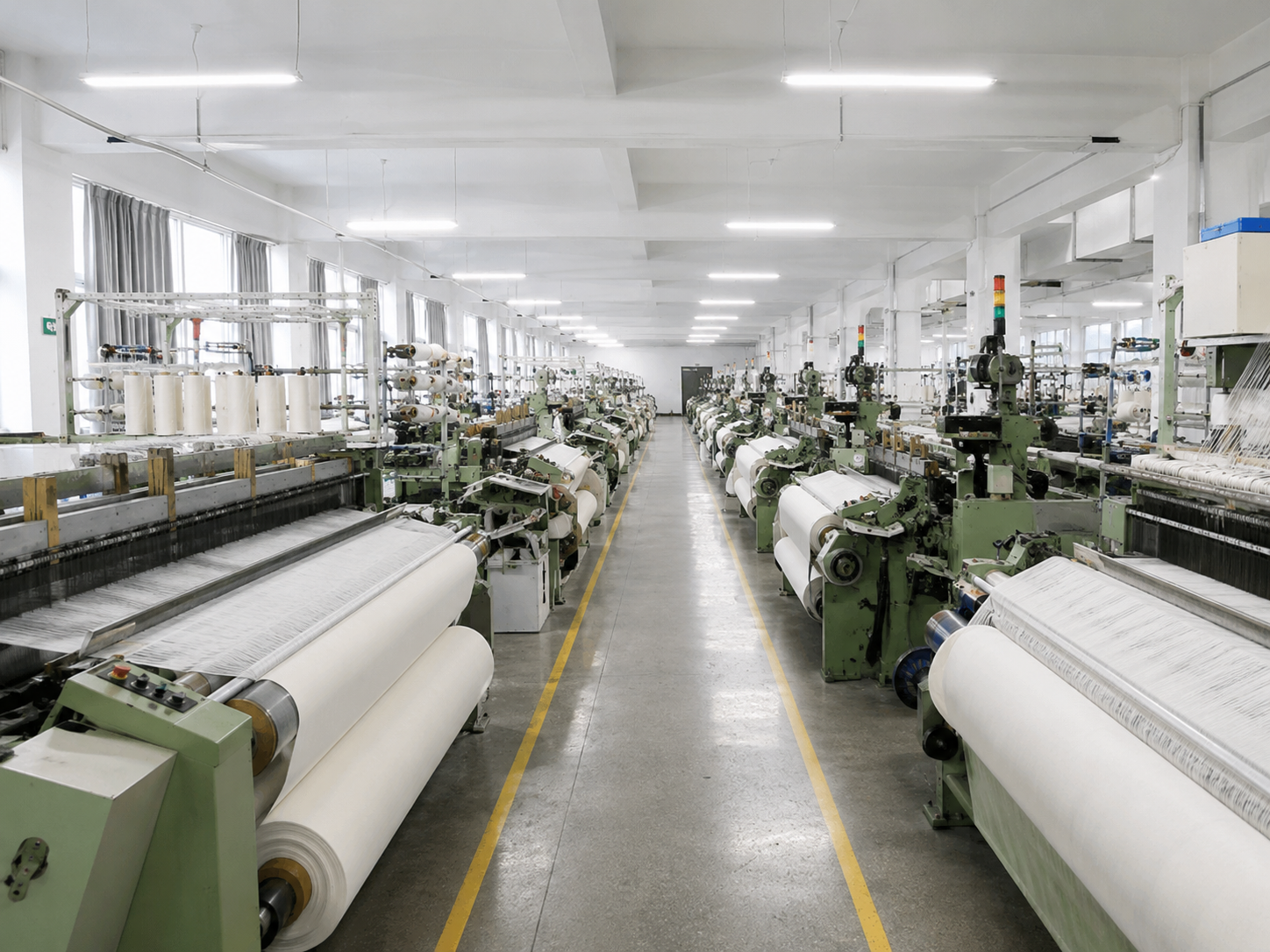
A textile manufacturer mainly engaged in fabric weaving and finishing operates multiple air-jet looms, winding machines, pneumatic valves and auxiliary cleaning devices in its workshop. As a critical power source in the production process, compressed air directly affects loom operating efficiency, product quality and the stability of continuous workshop production.
With increasing orders and longer equipment running hours, the original compressed air system gradually showed problems such as supply pressure fluctuation, high energy consumption and frequent maintenance. In particular, when multiple air-jet looms run simultaneously, instantaneous air demand is high and the original system tends to experience pressure drops, affecting stable equipment operation.
To reduce workshop electricity costs and ensure continuous production, the customer decided to carry out an overall evaluation and energy-saving retrofit of the existing compressed air system.
2. Problems Before the Retrofit
- Large fluctuation in air demand. Equipment in textile workshops starts and stops frequently, and air demand varies significantly between shifts and processes. The original compressors could not adjust flexibly to actual demand changes.
- Unstable supply pressure. During peak demand hours, the pressure in the main line dropped noticeably, causing some air-jet looms to run unstably with reduced efficiency.
- High energy consumption. The original system had long operated at high pressure to ensure terminal equipment supply, resulting in considerable wasted energy.
- Insufficient compressed air quality. The workshop requires a certain level of air dryness and cleanliness. The original dryer and filters had been in service for a long time with degraded performance, increasing the risk of equipment failures.
- Aged piping and air leaks. On-site inspection found leaks in some branch lines, joints and valves, causing significant compressed air loss and keeping the compressors in prolonged high-load operation.
3. RuiWo Solution
Based on the number of equipment units, production shifts, air pressure requirements, piping layout and air treatment configuration, the RuiWo technical team carried out a comprehensive analysis of the entire compressed air system and proposed an energy-saving air supply solution tailored to the textile workshop.
- High-efficiency energy-saving compressors. High-efficiency screw air compressors were adopted as the main air supply units according to actual workshop demand, with VSD models matched to load variation to reduce no-load operation and frequent unloading losses.
- Optimized system pressure. The pressure actually required by terminal equipment was re-assessed and the discharge pressure of the compressor station was adjusted accordingly to avoid long-term high-pressure operation that merely compensates for piping losses.
- Improved air storage. Air receiver capacity was increased or optimized to buffer pressure fluctuations during concentrated air demand from air-jet looms, improving supply stability.
- Upgraded drying and filtration. Refrigerated dryers and precision filters were configured to meet the workshop's air quality requirements, reducing moisture, oil and impurities in the compressed air to protect pneumatic components and production equipment.
- Leak detection and repair. Main lines, branch lines, valves and quick couplings were inspected and obvious leak points were repaired to reduce compressed air waste.
- Regular maintenance program. A periodic maintenance plan covering air filters, oil filters, oil separators, lubricant, dryer condensate drainage and filter elements was established to ensure long-term stable system operation.
4. Results After the Retrofit
After the retrofit, the compressed air system in the textile workshop ran more smoothly, with noticeably reduced pressure fluctuation during peak demand and improved stability of air-jet looms and pneumatic equipment.
Through compressor configuration optimization, system pressure adjustment, piping leak repair and air treatment upgrades, the overall energy consumption of the compressor station dropped significantly, equipment failure rates decreased and daily maintenance became more standardized. Workshop production continuity improved, and downtime and efficiency losses caused by unstable air supply were effectively reduced.
5. Customer Benefits
- Lower air costs. Rational equipment selection, VSD control and pressure optimization reduce ineffective power consumption of the air system.
- Higher production stability. More stable supply pressure meets the continuous operation requirements of air-jet looms and other equipment.
- Better compressed air quality. Improved drying and filtration reduce the impact of moisture and impurities on equipment.
- Fewer equipment failures. Stable air supply and standardized maintenance reduce wear on pneumatic components and extend equipment service life.
- Better workshop management. Clearer system operation facilitates maintenance, energy statistics and production management.
6. Project Summary
The textile industry demands high stability and continuity of compressed air, especially for air-jet looms, pneumatic controls and cleaning/blowing processes, all of which rely on stable, clean compressed air. If the air system suffers from long-term high-pressure operation, piping leaks or insufficient air treatment, it not only increases electricity costs but also affects production efficiency and equipment life.
RuiWo provides energy-saving retrofits, equipment renewal, piping optimization, air treatment configuration and long-term maintenance services for the textile, dyeing and garment processing industries, helping customers achieve stable air supply, energy savings and efficient production.